What Are Marketing Channels?
Marketing channels are the pathways and platforms businesses use to communicate with potential customers, promote products or services, and ultimately drive sales. These channels serve as bridges between your business and your target audience, enabling you to deliver your marketing messages through various mediums including digital platforms, traditional media, direct sales, and partnerships.
In today’s interconnected marketplace, understanding and effectively utilizing marketing channels is essential for business growth. The right mix of channels helps you reach customers where they already spend their time, building brand awareness and generating revenue.
The Core Types of Marketing Channels
Digital Marketing Channels
Digital channels have revolutionized how businesses connect with consumers. These online platforms offer unprecedented reach, precise targeting, and measurable results.
Social Media Marketing encompasses platforms like Facebook, Instagram, LinkedIn, Twitter, and TikTok. Each platform attracts different demographics and serves unique purposes. Instagram excels for visual storytelling and younger audiences, while LinkedIn dominates professional networking and B2B marketing. Social media allows for both organic content and paid advertising, making it versatile for businesses of all sizes.
Search Engine Marketing (SEM) includes both search engine optimization (SEO) and pay-per-click (PPC) advertising. SEO focuses on improving your website’s visibility in organic search results through content optimization, technical improvements, and link building. PPC advertising, particularly through Google Ads, allows businesses to display ads to users actively searching for relevant products or services. This intent-driven approach often delivers high-quality leads.
Email Marketing remains one of the most cost-effective channels available. With an average ROI of $42 for every dollar spent, email allows personalized communication with segmented audiences. Newsletter campaigns, promotional offers, automated drip sequences, and abandoned cart reminders all leverage this channel to nurture leads and retain customers.
Content Marketing involves creating valuable content that attracts and engages your target audience. This includes blog posts, videos, podcasts, infographics, webinars, and ebooks. Content marketing establishes your brand as an industry authority while improving SEO performance and providing shareable assets for other channels.
Traditional Marketing Channels
Despite the digital revolution, traditional channels continue delivering results for many businesses, particularly when targeting specific demographics or local markets.
Television Advertising offers massive reach and the ability to create emotional connections through storytelling. While expensive, TV remains powerful for brand building and reaching older demographics who consume traditional media.
Radio Advertising provides local market penetration and the ability to reach commuters and specific demographic segments based on station format. Radio ads are more affordable than television and can be produced quickly.
Print Media including newspapers, magazines, brochures, and direct mail still resonates with certain audiences. Trade publications effectively reach professional audiences, while local newspapers maintain strong community connections.
Outdoor Advertising such as billboards, transit ads, and signage creates repeated exposure in high-traffic areas. This channel works excellently for building local brand awareness and complementing other marketing efforts.
Direct Marketing Channels
Direct channels involve personal interaction between businesses and customers, creating opportunities for relationship building and immediate feedback.
Direct Sales through field representatives or retail locations allows face-to-face interaction, product demonstrations, and personalized service. This channel suits complex or high-value products requiring detailed explanation.
Telemarketing enables direct conversation with prospects, though it faces increasing regulatory restrictions and consumer resistance. When executed properly with permission-based calling lists, it can still generate leads for certain industries.
Events and Trade Shows provide concentrated opportunities to meet potential customers, demonstrate products, and network with industry peers. These events create memorable brand experiences and generate qualified leads.
Channel Partnerships
Many businesses leverage partnerships to extend their marketing reach without building every capability internally.
Affiliate Marketing involves partnering with individuals or companies who promote your products in exchange for commissions on resulting sales. This performance-based model minimizes upfront costs while expanding your marketing footprint.
Influencer Marketing taps into the audiences of social media personalities, bloggers, and content creators. These influencers lend credibility and access to engaged followers who trust their recommendations.
Distribution Partners including retailers, wholesalers, and resellers provide access to established customer bases and sales networks. Strategic partnerships can rapidly expand market presence without significant investment in infrastructure.
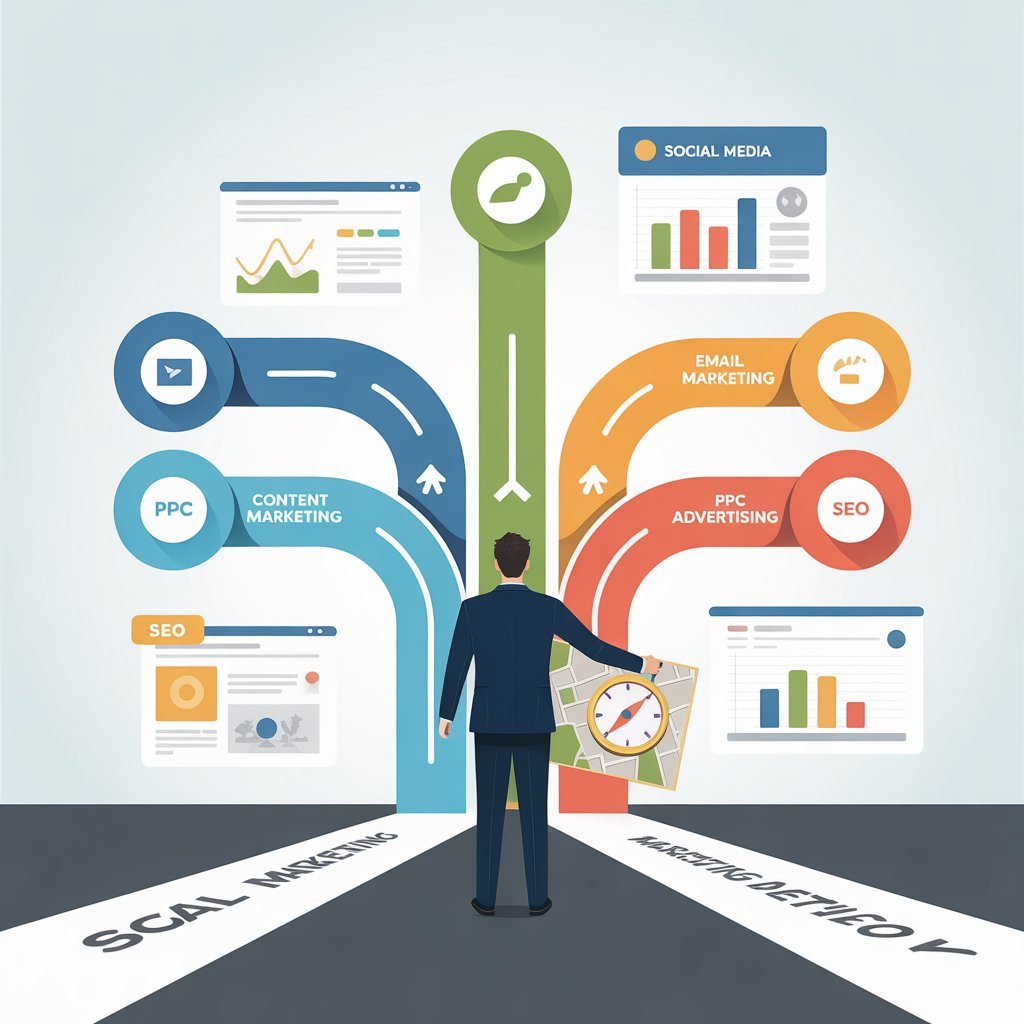
Choosing the Right Marketing Channels
Selecting appropriate channels requires understanding your business objectives, target audience, budget, and competitive landscape.
Know Your Audience deeply. Research where your ideal customers spend time, how they consume information, and which channels influence their purchasing decisions. A B2B software company will prioritize different channels than a consumer fashion brand.
Consider Your Budget realistically. Some channels require significant investment before yielding results. PPC advertising offers quick visibility but ongoing costs, while SEO demands patience but builds sustainable traffic. Balance immediate needs with long-term strategy.
Evaluate Your Resources honestly. Managing multiple channels effectively requires time, expertise, and tools. Starting with fewer channels executed excellently often outperforms spreading resources too thin across many channels.
Analyze Your Competition to identify successful strategies and market gaps. Understanding which channels competitors dominate helps you decide whether to compete directly or differentiate by focusing on underutilized channels.
Test and Measure systematically. Digital channels provide detailed analytics showing what works and what doesn’t. Establish clear key performance indicators (KPIs) for each channel and regularly analyze performance data to optimize your mix.
Creating an Integrated Multi-Channel Strategy
The most successful businesses don’t rely on single channels but create integrated strategies where channels work together synergistically.
Cross-Channel Consistency ensures your brand message, visual identity, and value proposition remain cohesive across all touchpoints. Customers often interact with multiple channels before purchasing, and consistent experiences build trust.
Channel-Specific Optimization recognizes that each platform has unique characteristics, audience expectations, and best practices. Content that performs well on LinkedIn may flop on TikTok. Adapt your approach while maintaining core brand identity.
Customer Journey Mapping helps identify which channels serve different stages of the buying process. Social media might create awareness, content marketing builds consideration, email nurtures leads, and direct sales closes deals. Design your channel mix to support the complete customer journey.
The Future of Marketing Channels
Marketing channels continue evolving rapidly. Emerging technologies like artificial intelligence, voice search, augmented reality, and new social platforms constantly reshape the landscape. Successful marketers stay informed about trends, remain flexible, and continuously experiment with new opportunities while maintaining focus on proven performers.
The proliferation of channels creates both opportunity and complexity. Businesses can reach customers in more ways than ever, but they must also cut through increasing noise and competition for attention. Success requires strategic thinking, consistent execution, and willingness to adapt as consumer behavior and technology evolve.
Conclusion
Marketing channels are the foundation of how businesses communicate value and connect with customers. Whether digital or traditional, direct or partnership-based, each channel offers unique advantages for reaching specific audiences and achieving particular objectives. The key lies not in using every available channel but in strategically selecting and integrating the right mix for your business, audience, and goals. By understanding the strengths and limitations of different marketing channels and continuously optimizing based on performance data, you can build an effective marketing strategy that drives sustainable business growth.